A curious development in the Eric Jackson–SRX mystery isyesterday’s announcement that SRX has invested in a company called Onconetix, betting on its pending acquisition of Realbotix. The pitch? Robotic eyeballs with an AI vision system. Mmmmk.
No investment size or purchase price was disclosed, nor was any word of Eric Jackson’s involvement. Given his history as a high-profile investor, you’d think there would at least be a cursory mention of his endorsement. In fact, he didn’t even seem to re-circulate the news on either his X or LinkedIn pages.
“If they don’t take the carrot we’ll give them the stick.”
That’s internal correspondence quoted by WP Engine and reproduced in a September 24 court order reviving its antitrust claims against Automattic and Matt Mullenweg.
The carrot was a trademark license: WP Engine could pay Automattic a percentage of its revenue. The stick? Well, as we saw, Mullenweg: blasted WP Engine at WordCamp US, blocked its access to WordPress.org, and added a login checkbox requiring users to declare they weren’t affiliated with WP Engine. In WP Engine’s account, that’s what refusing the carrot got you.
WP Engine alleges at least 11 competitors were targeted for multimillion-dollar deals. The order recounts an alleged “Restriction of choice plan”—a remarkably candid name for something happening around open-source software.
Judge Araceli Martínez-Olguín found the allegations sufficient to let four antitrust claims proceed. The WordPress.org checkbox requiring users to deny any affiliation with WP Engine also supports a plausible illegal-tying claim: access conditioned on not dealing with a competitor.
These remain allegations, not a liability finding. In the order, Automattic also won dismissal of WP Engine’s computer-fraud-law extortion claim without leave to amend.
Judge Araceli Martínez-Olguín, U.S. District Court, Northern District of California
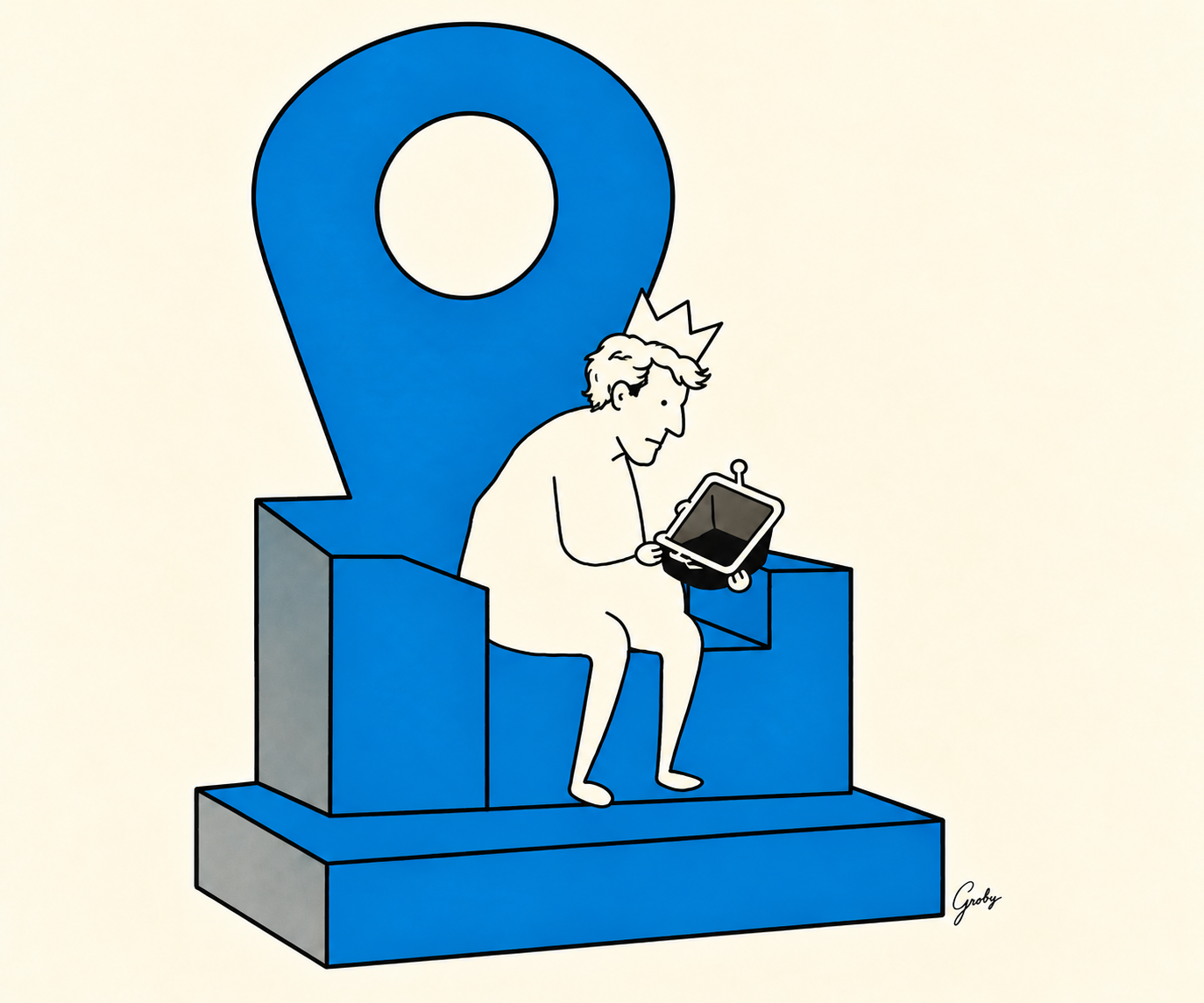
This morning I was looking through random microcaps and came across SRX Global (SRXH), which earns most of its paltry revenue from selling dog food. Jackson has been closely tied to SRX since the firm purchased his AI-crypto-type company, EMJX, in June. What the hell?
The stock has been in total freefall since the deal closed. The December 16 deal announcement initially sent it up 23.8%, to $22.62. Through September 23, it has lost 92.5% of that value.
I’d always assumed EJ was a winner, but the stock has fallen sharply overall since the deal announcement.
Digging deeper, I found something else that raised more questions. Jackson was originally supposed to become CEO and chairman, and the company was supposed to go so far as to change its name to EMJX as part of the deal announced last December. Investors had been promised EJ would run the company.
Something happened on the way to the closing
When the deal closed in June, incumbent CEO Kent Cunningham kept his job. Jackson became president of the EMJX platform and head of asset management. The company changed its name from SRx Health Solutions to SRX Global, rather than EMJX, and kept its ticker.
“I signed a deal back in December. Along the way, that deal changed. I had a decision to make.”
He doesn’t say why the change was made or who wanted it.
His tone sounds just a little bitter to me. I get the impression there was some acrimony, but there’s a chance I’m reading too much into too little. He’s plainly irritated with online critics and cites Steve Jobs and Elon Musk as models in how he’s going to ignore his critics. He does note that he bought shares of SRX himself before closing and is underwater, along with friends and family who had bought in… So I guess he’s still invested in the deal and making it work?
Jackson and CEO Kent Cunningham are appearing on a webinar September 30th and I’ll definitely be tuning in for that.
We haven’t checked in on our favorite strip club stock lately so I thought I’d just see what they were up to. Apparently, they had some issues filing reports over the summer. Whoops.
RCI’s overdue reports became a chain reaction. Here’s how the excuses piled up before it regained Nasdaq filing compliance in May.
December 15, 2025: More audit work. RCI blamed its late annual report on additional audit procedures connected to the New York indictment.
May 11: The earlier delays made us late again. The annual report arrived March 19; the December-quarter report, May 7. That left a “late start” on the March-quarter report. RCI said it hadn’t had “sufficient time.”
Its May 11 release announced restored Nasdaq filing compliance—and the next delay. Same release. It didn’t expect to meet the extension period, either.
June 1: Finally, the cure. RCI announced it had filed the March-quarter report May 28. Nasdaq restored filing compliance May 29.
Sasan Goodarzi, the CEO of Intuit, wants you to know he doesn’t read books. Thinks they’re a waste of time. But if you put a gun to his head and made him recommend one? Angela Duckworth’s Grit: The Power of Passion and Perseverance.
Let that settle in for a second.
The man running a $160 billion company is publicly bragging that books are beneath him, and his one exception is the most airport-bookstore, LinkedIn-influencer, TED-talk-to-paperback title of the last decade. A book whose thesis can be summarized in four words: try hard, don’t quit.
Mobileye, the crown jewel of Intel’s garage sale, is trimming another 200 employees from the payroll. Despite actually beating revenue expectations recently, stock of the robotaxi maker is still in a down nearly 27% over the last year. Management is calling this a “strategic adjustment,” which is the PR way of saying “we need to make the balance sheet look pretty before Intel dumps another billion-dollar chunk of us.”
After already killing off their LiDAR and Lane Departure units over the last two years, this latest round of layoffs equates to around 4% of global staff. But don’t worry, the suits say they’re still “recruiting for positions required to realize long-term plans.” Translation: We’re firing the expensive veterans today so we can hire cheaper replacements tomorrow. If you’re currently drawing a paycheck at the Mobileye campus, keep your resume on a thumb drive and your eyes on the door, because the most reliable “autonomous” driving from this company is its stock going off a cliff.
RCI Hospitality Holdings, the publicly traded strip club empire and owner of Rick’s Cabaret and Bombshells has announced the abrupt departure of CEO Eric Langan and CFO Bradley Chhay.
Recently, the company and several executives, including Langan and Chhay, were indicted by New York state over an alleged long running tax and bribery scheme. NY claims that the company bribed a state official with “Dance Dollars,” to lower its tax burden. RCI and the executives deny the allegations, but the stock has been on a slide all year, shedding 58% of its value.
The timing of the resignations is really odd.
In a normal corporate transition, you’d expect something like:
“Effective immediately” (emergency mode), or
“Effective at year-end” (pretend this is totally planned and strategic).
Instead, we got an announcement two days before Thanksgiving to take effect the day after. A November 25th announcement, which goes into effect on November 28th.
The C-suite equivalent of “I’m breaking up with you… on Monday. I still need a ride to the airport.”
In those three days, the company nominally gets to say it still has “continuity” while everyone prints new org charts. Starting November 28:
Travis Reese (current executive vice president) becomes Interim President and CEO
Albert Molina (current director of financial reporting) becomes Interim CFO
At the same time, Langan and Chhay do not actually leave the building. They stick around as advisors and keep their compensation structures.
Officially this is a “leadership transition” and the board is bravely “positioning the company for the future.” In reality, it looks like the board wanted to show regulators and investors that it did something about the indicted executives without losing the two people who know every lease, liquor license, side deal, and debt covenants by heart.
HP ($HPQ) will be cutting between 4,000-6,000 jobs in its big Thanksgiving week push (10% of staff) in order to “streamline operations” for its “AI push.” This is on top of 1,000 already affected by cuts last February.
HP says the move will save over $1bil over the next three years.